
01 · Learning by doing
We listened to a customer interview.
Delegates built a persona live from a fictional, but realistic customer interview I ran in the room.
Samsung
Finding product-market fit through Design Thinking

Case study 08
My role
Workshop Facilitator
Client
Samsung
Industry
Innovation, Sustainability
Skills demonstrated
How I opened the room
{{ d.name }}
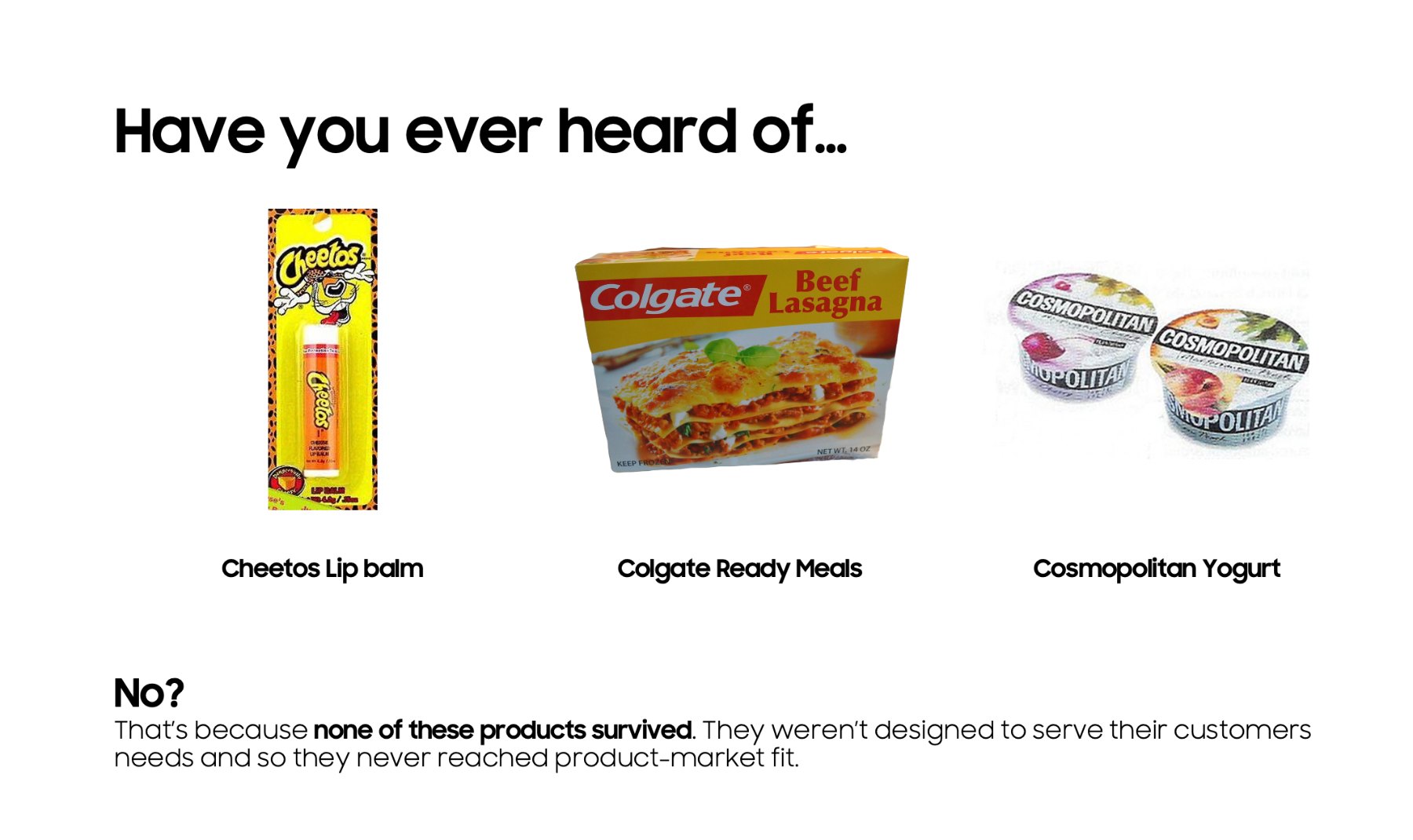
Brands you know, products you've never heard of, because none of them survived. That is product-market fit, taught in ten seconds, and it is how I opened the session.
Samsung's Solve for Tomorrow competition challenges 16 to 25 year olds to build sustainable technology that helps their communities, with £10,000 for the winner. I was brought in to teach the session that decides whether an idea survives contact with the real world: finding product-market fit. Across two cohorts, I took forty young innovators from a rough idea to a defensible value proposition, using the same product-strategy tools I use with startups, taught so a sixteen year old could pick them up and run with them.
The core of early product strategy, in the order a founder actually works through it. Applied, not theoretical.
I built the workshop around doing, not listening. That was the work: adapting a complex topic for the people actually in the room.
My job was translation: taking something as ambiguous and multifaceted as product-market fit and making it clear enough that a room of teenagers could understand and attempt it.
Delivered live, twice, for one of the UK's flagship innovation competitions.
Testimonial
Great session yesterday and looking forward to the next one. We've had a lot of really positive feedback come in already from the younger age group.
Next case study